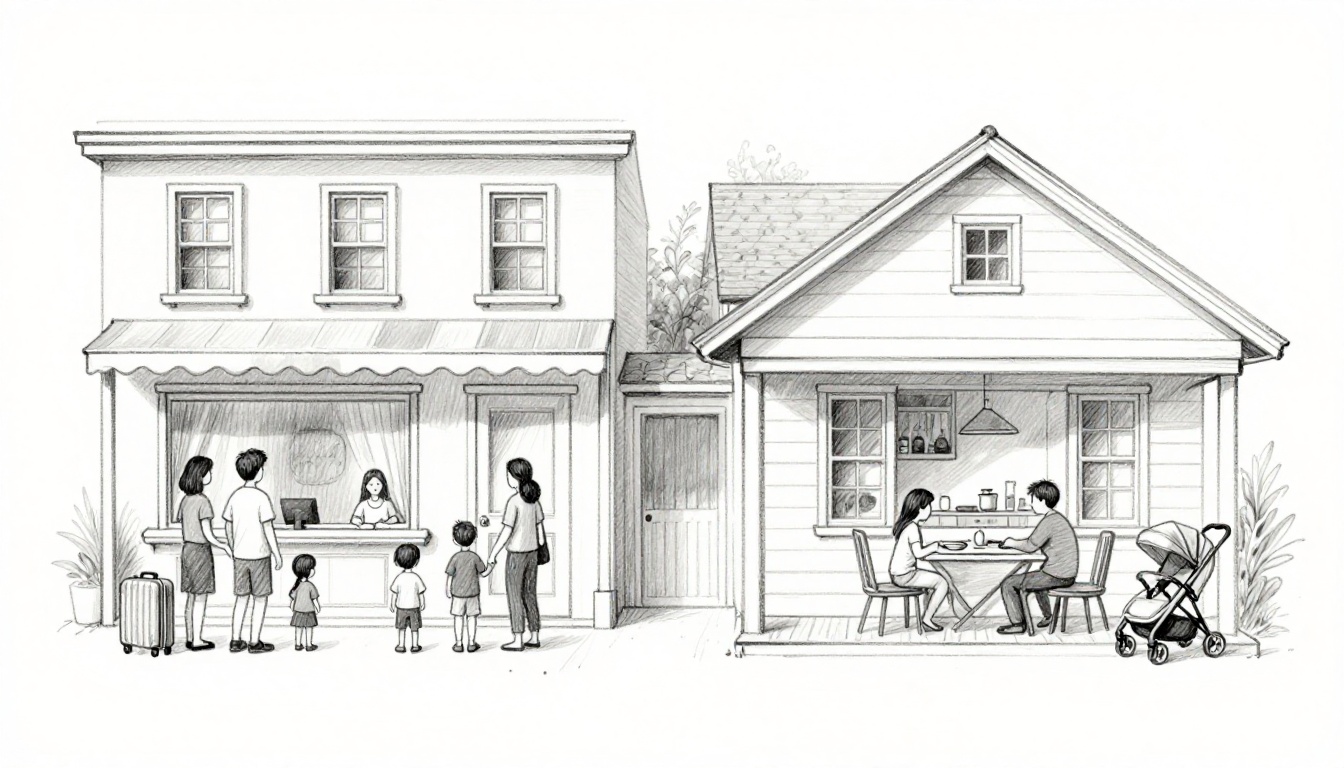
When you're booking a family trip, the cheapest option isn't always the one with the lowest nightly rate. Hotel deals vs Airbnb comes down to trip length, family size, food plans, and those sneaky extra fees that change the total fast.
For a quick one- or two-night stay, hotels often win. For longer trips, Airbnb can come out cheaper, especially if you need more space and want to cook a few meals.
Prices also shift by city and season, so the same trip can look totally different depending on where you're going. Let's break down the full trip cost, not just the room rate, so you can see which option actually saves you money.
Quick answer: which one is usually cheaper for families?
For most family trips, hotels are usually cheaper for 1 to 3 nights. Once you get into 5 to 7+ nights, Airbnb often pulls ahead, especially if your family is bigger and you actually use the kitchen. That's the simple rule of thumb.
The part that trips people up is this: the nightly rate is only half the story. A hotel can look pricier at first, then win once you add one Airbnb cleaning fee, service fees, and extra grocery runs. On a longer stay, though, that same hotel bill keeps climbing while a rental can spread its fees over more nights.
 ### The simple rule of thumb
If you want the fast answer, here it is:
- 1 to 3 nights: hotels are usually the cheaper, easier pick
- 4 to 6 nights: it depends, and this is where you really need to compare the total
- 5 to 7+ nights: Airbnb often wins, especially for families who need space and a kitchen
That middle stretch is where people get surprised. A hotel might still be cheaper in some cities, but once the trip gets longer, the rental starts making more sense. The room is only part of the price, and family travel rarely stops at the room.
For families, the cheapest choice is usually the one with the lowest total trip cost, not the lowest nightly rate.
Why the food budget matters so much
This is the big one. On family trips, food can matter more than the room price. Two hotel rooms plus breakfast, lunch, and dinner out can add up fast, while an Airbnb kitchen can cut that bill down hard.
If you cook even a few meals, the savings stack up quickly. That's why rentals often look better on longer stays, because the kitchen starts paying for itself. For short trips, though, nobody wants to spend vacation time grocery shopping and washing dishes, so hotels stay ahead.
A quick example makes it obvious. A hotel may be the better deal for a weekend, but an Airbnb can be cheaper for a full week once you factor in meals, space, and fewer room charges. For families, that food math is usually the real deciding factor.
A side-by-side cost breakdown for a family trip
Okay, so here's where the whole thing gets real. The nightly rate is just the starting point, and for families, that number can be a little sneaky. Once you add fees, taxes, parking, meals, and space, the cheapest option on the search page is not always the cheapest option at checkout.
A good way to compare hotel deals vs Airbnb is to look at the full trip, not one line item. A family of four on a 3-night trip can look very different from the same family on a 7-night stay, and that's usually where the answer flips.
 ### What the hotel total really includes
A hotel deal can look super cheap at first. Then the add-ons show up, and suddenly the bill feels a lot less friendly. You want to look at the all-in cost, not just the room price, because hotels often charge by room and by night.
Here's what usually belongs in the real total:
- Nightly rate: the base room price you see first
- Resort fees: sometimes charged daily, even if you never use the pool or gym
- Parking: valet or self-park can add a lot, especially in bigger cities
- Breakfast: free at some hotels, extra at others
- Wi-Fi: often included, but not always
- Extra room cost: if your family cannot fit in one room, you may need two
That last one changes everything. A hotel that looks like a bargain for two people can get expensive fast when a family needs more space. And once you split the family across two rooms, the cost often jumps higher than people expect.
A cheap hotel rate is nice. A cheap total is better.
The upside is convenience. Hotels usually keep things simple, especially on short trips. You check in, sleep, grab breakfast if it's included, and go. No grocery run, no kitchen cleanup, no figuring out who gets the couch bed.
If you want a closer look at the fee side, Airbnb vs. hotel all-in pricing is a helpful reference for how these totals can change once everything is included.
What the Airbnb total really includes
Airbnbs can look cheaper at the listing stage, and sometimes they are. But the price you see first is rarely the price you pay last. The real total usually includes the nightly rate, a cleaning fee, a service fee, and taxes. Some stays also come with early check-in charges, damage deposits, or stricter house rules that can affect the value.
For families, that fee stack matters. A listing that looks like a win can lose its edge once the checkout screen adds everything up. And if the rules are tight, you may be paying less money but dealing with more hassle.
A simple comparison helps:
| Cost item | Hotel | Airbnb |
|---|---|---|
| Room cost | One room, sometimes two for families | One whole property or apartment |
| Fees | Resort fees, parking, maybe breakfast | Cleaning fee, service fee, taxes |
| Meals | Often purchased outside the hotel | Kitchen can reduce meal costs |
| Space | Can be tight for larger families | Usually more room to spread out |
| Extra charges | Two rooms if needed | Early check-in, deposits, house rules |
The table makes the key point pretty clear. Hotels can be easier to compare on the front end, but the total grows with add-ons. Airbnbs can look cheaper at first, then climb after fees, but a kitchen and extra space can still make them the better value for a family.
Also, don't forget groceries. If you book an Airbnb and plan to cook, food is part of the budget. That can still be a savings, especially on a longer stay, but it is not free money. A few breakfasts and simple dinners at the rental can cut costs a lot compared with eating out every meal.
Where the comparison flips by trip length
This is the part that keeps things simple. The shorter the trip, the more hotels usually win. The longer the trip, the more Airbnb starts to make sense, because those one-time fees get spread across more nights.
Think of it like this:
- On a 3-night trip, a cleaning fee hits hard because you're only splitting it a few ways.
- On a 7-night trip, that same fee is easier to absorb.
- Add a kitchen, and you may also save on breakfast and dinner.
So if you're heading out for a weekend, hotels often come out ahead. You're not staying long enough for rental fees to soften. But if you're staying a week, the math starts to shift, especially with kids in tow and meal costs climbing every day.
A quick example makes it easy to picture. Say your family of four is going away for 3 nights. A hotel might look better because you only pay for a room, even with parking and taxes. Now stretch that same trip to 7 nights, and the hotel total keeps rising every night, while the Airbnb fee load stays more fixed. That is where the break-even point starts to move.
The family-size piece matters too. Once you need more sleeping space, a rental can beat a hotel on per-person cost. If you're comparing a one-bedroom hotel room to a larger rental with a kitchen, the Airbnb often feels more practical and less cramped. For a fuller look at why group size changes the math, the family-trip pricing breakdown shows how travelers think about that tradeoff in real life.
A simple way to think about it is this:
- Short stay, small family, eating out anyway: hotel usually wins.
- Longer stay, bigger family, kitchen use: Airbnb often wins.
- Borderline trip: compare the total, not the headline price, because that is where the answer hides.
When you line it up this way, the decision gets a lot less confusing. Hotels can still be the cheaper and easier pick for a quick trip. Airbnbs can pull ahead once the stay gets longer and the kitchen actually gets used.
The hidden fees that can change the winner
This is where the cheap-looking option can turn into the expensive one. A family trip rarely comes down to the headline price alone, because the extras show up fast, and they don't always show up in the same place.
Hotels and Airbnbs each have their own fee tricks. If you're comparing them side by side, you want the full bill, not the first number that looks friendly. That is usually where the real winner hides.
Hotel fees families should watch for
Hotels can look clean and simple on the search page, then the add-ons start stacking. Resort fees are the big one, and they often cover things like Wi-Fi, pool access, gym use, or bottled water whether your family uses them or not. In some cities, parking can be just as painful, especially if you need valet or a nightly garage spot.
Breakfast is another sneaky one. Some chain hotels include it, and that can be a real win for families because one meal is already handled. Others charge per person, and that turns a decent rate into a much bigger number once everyone wants eggs, fruit, and juice before heading out.
A few more charges can sneak in too:
- Extra-bed or rollaway fees when the room doesn't fit the whole family
- Paid Wi-Fi at properties that split basic internet into a fee
- Amenity charges for things that sound free but are bundled into a daily add-on
The hotel chain matters a lot here. Some brands are a better deal because breakfast is included and parking is reasonable. Others pile on costs so fast that the room rate stops meaning much. Loyalty perks can help, too, since free breakfast, waived parking, or room upgrades can trim the final bill. A good price-match policy can do the same thing if you catch a lower rate before booking.
If you want to double-check how hotels describe these extras, Google's hotel price filters are a reminder to look for "total price" views instead of just the nightly rate.
A hotel that looks cheap at checkout can still be expensive by morning.
Airbnb fees families should watch for
Airbnbs can be great for space, but the fees can bite hard on short stays. The biggest one is usually the cleaning fee, and since it's a flat charge, it hits a 2-night trip much harder than a weeklong stay. Then comes the service fee, plus taxes, and sometimes an extra guest fee if your family goes over the host's limit.
That is where the math gets annoying. A place that looks affordable at first can jump quickly once every add-on is counted. The shorter the stay, the worse it feels, because the same cleaning fee gets spread over fewer nights.
Families also need to read the house rules closely. Some rentals ask for chores before checkout, like taking out trash, starting towels, or loading the dishwasher. That does not always change the price, but it absolutely changes the experience. Add in stricter cancellation terms or nonrefundable cleaning charges, and the value can drop fast if plans shift.
A quick list of the usual Airbnb cost traps:
- Cleaning fees that make short stays much pricier
- Service fees that raise the booking total
- Taxes that vary by location
- Extra guest charges for larger families
- Chore lists or strict rules that add hassle without adding value
For a deeper look at common rental fees, Airbnb's own cleaning fee guidance shows how hosts set these charges. That doesn't make the fee small, but it does make the math easier to spot before you book.
Why taxes and location matter
Taxes can change the story even when the property itself stays the same. Local occupancy taxes, city fees, and event pricing can push both hotels and Airbnbs higher, and the jump can be bigger than people expect. Big cities are often the most obvious example, but holiday weekends and major events can do it too.
Think about it like this. A family-friendly hotel in Orlando might look fine in January, then suddenly get more expensive around spring break. A rental in New York City can swing the same way during a holiday weekend or a big convention. Same room, same house, very different total.
 The city matters because fees are tied to local rules and demand. The dates matter because booking pressure changes fast. That is why the same property can feel like a bargain one week and overpriced the next.
So before you pick a winner, compare the same city, the same nights, and the same guest count. That is the only way to see the real number. Otherwise, you are comparing two different trips, and that is how sticker shock shows up at checkout.
When hotel deals beat Airbnb for family travel
Sometimes the higher base rate is the better buy. That sounds backward, but it happens all the time with family travel. If your trip is short, your plans are simple, and you want less hassle, a hotel deal can beat an Airbnb on total value, not just price.
This is where hotels start looking smart again. You get a cleaner stay, fewer surprise tasks, and services that actually matter when you are moving with kids, bags, snacks, and a tight schedule. The room may cost more up front, but the trip can still cost less in the end.
Short trips and last-minute getaways
For 1 to 3 night stays, hotels usually make more sense. A flat Airbnb cleaning fee can eat up the savings fast, especially when you are only there for a weekend. That one charge gets spread over so few nights that it can make a "cheap" rental look pretty expensive.
Hotels also fit short trips better because families are often just sleeping there. You are not settling in for a full kitchen routine or spending all day in the rental. You drop your bags, sleep, grab breakfast, and head out. That is a lot easier than stocking a fridge, washing dishes, and trying to make the space feel like home for two nights.
If the whole trip is basically a quick stopover, the hotel math is simple. Less time, less fuss, less chance for fees to pile up.
Cities where hotel bargains are stronger
Hotels can also win in places where Airbnb fees are high or short-term rental rules are tight. In some cities, stricter regulations limit rental supply, and the remaining listings can get pricey fast. Hotel competition can be stronger in the same places, which pushes rates down more often than people expect.
That is especially true during off-peak periods. In a lot of destination cities, hotels drop prices when demand softens, and family travelers can catch real bargains. A deal that looks average in a search result can turn into a much better value once taxes, fees, and location are all compared side by side. How Airbnb rules affect hotel prices is a good reminder that local policies can shift the market in a big way.
Families who want convenience over space
This is the big one. Some families do not care as much about extra square footage. They care about easy mornings, clean rooms, and someone else handling the basics.
A hotel can be the better deal when you want:
- Daily housekeeping so the room resets itself
- Front desk help for late arrivals, keys, or quick questions
- Luggage storage for early check-in or late checkout days
- Pool access without adding another booking fee
- Breakfast included so one meal is already handled
- Simple check-in when everyone is tired and cranky
For a lot of families, that stress reduction is worth a little more money. You are not just paying for a bed. You are paying for a smoother trip, and that can be the best value of all.
When Airbnb is the cheaper choice for families
Airbnb starts to make a lot more sense when the trip gets bigger, longer, or both. That is where the savings stop being about the nightly rate and start coming from the whole setup, space, kitchen, laundry, and fewer restaurant bills.
For families, that can be a huge deal. A rental that looks a little pricier at first can still come out ahead once you split the cost across more people and use the place the way it was meant to be used.
 ### Longer stays where the kitchen saves real money
This is where Airbnb really starts pulling its weight. If you stay long enough to cook breakfast, pack snacks, and make a few easy dinners, the food savings can be very real. That matters most on week-long vacations, when eating out every meal gets expensive fast.
Think about it in simple terms. Coffee, cereal, fruit, sandwiches, pasta, and a few grocery store dinners can replace a lot of restaurant tabs. Even if the rental has a cleaning fee, that kitchen can still save more than it costs once you spread the savings across several days.
A family travel budget guide from Airbnb points out the same thing, kitchens and laundry can make a big difference on longer stays. And that matches what most families feel in real life, less scrambling, fewer expensive meals, and a lot more control over the trip budget.
Bigger families or groups needing extra bedrooms
If your family needs more than one hotel room, the math changes fast. One large Airbnb can often cost less than booking two hotel rooms, and the per-person price usually drops once the group gets big enough.
That is especially true for families traveling with grandparents, cousins, or friends. Instead of splitting everyone up, you get one shared space, one kitchen, and one living room where people can actually hang out together. It feels more like a home base and less like a pile of separate reservations.
A quick example makes it easy to see:
- Two hotel rooms can double the cost before you even add parking or breakfast.
- One larger rental usually gives everyone their own bed without paying for two separate front desks, two room keys, and two nightly charges.
- Shared space makes mornings easier, especially when kids are getting dressed, eating, and moving at different speeds.
That shared setup can be the best part. Everyone can spread out without losing each other in separate rooms, and that alone can make the trip feel smoother.
When more space is worth more than hotel services
Hotels have their perks, but families do not always need bells and whistles. Sometimes the better value is just room to breathe. A living room, kitchen, laundry, and separate bedrooms can take a lot of pressure off the day.
Nap schedules are a perfect example. With separate bedrooms, one child can sleep while the rest of the family stays up. Bedtime routines are easier too, because you are not tiptoeing around a single cramped room or trying to keep lights off while someone else is still awake.
Laundry helps more than people expect. If you can wash a few outfits during the trip, you pack less in the first place. That means lighter bags, fewer backups, and less stress when kids spill something halfway through dinner.
More space is not a luxury for families. Sometimes it is the thing that keeps the trip from feeling chaotic.
Airbnb is usually the better value when the rental works like a real home, not just a place to sleep. If the extra room helps your family rest, cook, and stay organized, the savings show up in more than one place.
How to find the best time to book
Timing matters more than most families think. The same trip can look cheap one week and overpriced the next, especially when you're comparing hotel deals vs Airbnb for a real family schedule. If you book too early, you can miss softer rates. If you wait too long, the best options can disappear fast.
The sweet spot depends on where you're going, how busy the season is, and how flexible your dates are. A little timing strategy can save you real money, and it keeps you from booking in that panicked, last-minute way that always costs more.
 ### Booking hotel deals at the right time
Hotel prices often soften about 5 to 6 weeks before arrival, then start creeping up again as the date gets closer. That window is a sweet spot for families because you can still find inventory, but the hotel is more likely to drop rates to fill empty rooms.
If you see a decent price, check whether it comes with free cancellation. That gives you room to book now and keep watching for a better rate later. A price-match policy can help too, since some hotels will adjust the rate if you find the same room cheaper elsewhere.
A simple approach works best here:
- Check rates about 6 weeks out.
- Compare the total price, not just the nightly rate.
- Book a flexible option if the deal looks good.
- Keep checking until closer to the trip.
Hotels can look expensive at first, then turn into the better deal once the dates settle down.
Booking Airbnb before prices climb
Airbnbs often look best around a month before the trip, especially for family stays where you want a whole home or extra space. That said, popular houses and larger homes can book early, so waiting too long can shrink your options fast.
This is where it helps to compare several listings side by side. A place with a lower nightly rate can lose its edge once you add a cleaning fee or a bigger service fee at checkout. Those charges can change between listings, so watch the full total before you confirm.
Families should also look at the cancellation rules before they book. A rental that seems like a deal can get expensive in a hurry if plans shift and the refund window is tight. If you want a quick reference point, recent Airbnb booking trends show why timing and flexibility matter so much.
Why school breaks and holidays need extra planning
Peak travel dates change everything. Spring break, summer vacation, Thanksgiving, and Christmas all push demand up, and both hotels and Airbnbs can jump in price fast. During those periods, the cheapest option can flip depending on the city and the size of the stay.
That is why families should start comparing early when travel lines up with school calendars. A hotel deal might be better for one holiday week, while a rental could win on another. If you wait until the last minute, you usually lose the best mix of price and choice.
The safest move is to compare early, especially if you need more than one bed or a kitchen. For high-demand dates, the booking window gets tighter, and the good listings go first. That is true whether you're planning a beach week, a city break, or a holiday trip to visit family.
Who should choose hotels, and who should choose Airbnb?
This is where the choice gets a lot easier. If you match the stay type to the way your family actually travels, the cheaper option usually shows itself pretty fast.
Some families want speed and service. Others want space, a kitchen, and room to spread out. Neither is wrong, but one usually fits your trip better.
 ### Best fit for hotels
Hotels usually make the most sense for short-trip families, especially when the trip is mostly about sleeping, showering, and heading back out. If you are only staying a night or two, you probably do not need a full kitchen or a living room you will barely use.
They also work well for light packers and families who want daily housekeeping. Fresh towels, made beds, and someone else handling the cleanup can make a short trip feel much easier.
Hotels are a strong pick if you do not want to cook. Some families are happy eating breakfast out and grabbing meals on the go, and that can actually be simpler than stocking a fridge and figuring out grocery runs.
For families who care about flexibility and easy check-in, hotel deals can be a great fit too. Late arrivals, one-night stopovers, and unpredictable travel days are usually smoother when there is a front desk and a standard check-in process.
If that sounds like your family, hotel deals are usually the cleaner choice. You get convenience, service, and fewer moving parts, which can be worth more than a bigger room.
Best fit for Airbnb
Airbnb usually works better for larger families, long-stay travelers, and groups that want a place to settle in. Once you need extra bedrooms, a kitchen, or a washer and dryer, a rental can start making a lot more sense than booking more than one hotel room.
It is also a smart pick if your family plans to cook, pack lunches, or do laundry during the trip. Those little things add up fast, and they can cut down the daily cost in a real way. For a weeklong stay, that can be huge.
Families who want a home-like setup often get more value from Airbnb even when the upfront price is not the lowest. A living room, separate bedrooms, and a real kitchen can make the stay feel less cramped and more relaxed. That extra comfort can matter more than shaving a few dollars off the nightly rate. Many families make the same call when they want space and simple meals under one roof.
Airbnb also tends to work better when the group wants to keep everyone together. If you are traveling with kids, grandparents, or another family, one rental can be easier than juggling separate hotel rooms.
Who should avoid each option
Do not pick a hotel if your family needs a kitchen or extra bedrooms. Once you are squeezing into one room or eating every meal out, the savings can disappear fast, and the trip can feel cramped.
Hotels can also be the wrong choice if you know you will be in the room a lot. If nap time, bedtime routines, or quiet space matter, a standard hotel setup may feel tight pretty quickly.
Do not pick Airbnb if your family wants hotel-style service, a strict cancellation policy, or a very short stay. A cleaning fee on a one-night or two-night trip can wipe out the value, and a no-front-desk setup can be annoying if your arrival time keeps changing.
Airbnb can also be a bad fit if you do not want chores or house rules hanging over the trip. If you want to show up, unpack, and leave everything else to staff, a hotel is the easier move.
The simplest way to choose is to ask two questions: Do we need space and a kitchen? If yes, Airbnb usually wins. Do we need convenience and service? If yes, hotels usually win. That answer gets you a lot closer to the right booking fast.
FAQ: the family travel cost questions people ask most
The price difference between hotels and Airbnbs gets a lot clearer once you stop looking at the headline rate and start looking at the whole trip. That means nights, fees, food, parking, and how much space your family actually needs.
 ### Is Airbnb always cheaper for families?
No, it depends on the trip length, the fees, and whether your family cooks. For short stays, hotels often come out cheaper because Airbnb cleaning fees and service charges can wipe out the savings fast. For longer stays, especially 5 nights or more, Airbnb often wins because the fees get spread out and the kitchen starts to matter.
If you are only staying a weekend, the rental can look cheap and still cost more at checkout. If you're staying a week, that same place may be the better deal once you cut a few restaurant meals.
Short trips usually favor hotels. Longer trips usually favor Airbnb.
Do two hotel rooms cost more than one Airbnb?
Often yes, but not always. Once you need two hotel rooms, the total can climb fast, especially after taxes, parking, and breakfast are added in. A larger Airbnb can be cheaper for bigger families because you pay one total instead of two separate room rates.
The real answer is to compare the full cost side by side. Look at:
- Hotel rooms plus taxes and parking
- Airbnb nightly rate plus cleaning and service fees
- Meals if the rental has a kitchen and the hotel does not
That last part matters a lot. Two hotel rooms may seem manageable until you add breakfast for everyone and dinner every night. A single Airbnb can look expensive at first, then turn out to be the better family value.
What matters most, nightly rate or food budget?
For family trips, the food budget can be the biggest swing factor. A room that is a little cheaper per night does not always save the most money if you are eating out three times a day. A kitchen can easily make up the difference, especially on weeklong vacations.
That is why Airbnb can win even when the nightly rate is not the lowest. A few grocery runs, simple breakfasts, and a couple of easy dinners can save far more than a small room discount. For families, that meal math is often the whole story.
If you're trying to decide fast, ask one simple question: will this trip include real kitchen use, or are you eating out anyway? That answer usually tells you which option is cheaper.
Simple ways to compare real prices before you book
The fastest way to compare hotel deals vs Airbnb is to stop looking at the first price you see. That number is just the starting line. What matters is the final total, the cancellation rules, and the little perks that can save you money later.
If you want a clean comparison, keep it simple and compare the same trip side by side. Same dates, same guest count, same location, same number of bedrooms if you need them. That is how you keep one option from looking cheaper than it really is.
 ### Use the same trip details for both options
Start with the same exact setup on both sides. If you search a hotel for two adults and two kids, do the same for the Airbnb. If you compare a place in the city center, don't switch the rental to a cheaper neighborhood and call it equal.
That kind of uneven comparison is how people get fooled. A hotel can look expensive only because it's in a better spot, or an Airbnb can look cheap because it's smaller, farther out, or missing a bedroom your family actually needs. Same trip details keep the math honest.
A quick comparison checklist helps here:
- Same dates so you are comparing the same demand level
- Same number of guests so the room or rental fits the whole family
- Same number of bedrooms if you need privacy or separate sleep space
- Same location so you are not comparing downtown to the suburbs
When those details match, the real winner usually shows itself fast. That is the cleanest way to avoid booking a deal that only looks good on paper.
Check the full checkout page before deciding
The checkout page is where the truth shows up. That is where you can spot the fees that turn a good-looking price into a much bigger bill. So don't stop at the listing page, go all the way through the total before you book.
For hotels, look for parking, resort fees, breakfast, taxes, and Wi-Fi. For Airbnb, look for cleaning fees, service fees, taxes, and any extra guest charges. A place can look cheaper until those extras are added in.
The price on the search page is not the price that hits your card.
A simple habit helps a lot here. Open the final total for each option and compare the same trip at the same time. If one booking includes breakfast and parking, give that credit. If the other one has a big cleaning fee, count it fully, not halfway.
Use three to five related articles to keep saving
Once you know the real price, the next step is squeezing a little more value out of the trip. This is a good place to read a few related Travel Deals posts, especially if you want to keep the family budget under control without doing a ton of extra work.
These topics fit naturally with this decision:
- How to find cheap hotel deals when you want a lower room rate without missing hidden costs
- Best times to book vacation rentals so you know when Airbnb prices tend to rise or soften
- Ways to save on family vacation food since meals can change the whole budget fast
- How to avoid hotel resort fees when a hotel looks cheap but the extras keep climbing
- Money-saving travel timing tips for school breaks, holidays, and busy weekends
You do not need to read everything at once. Even one or two smart follow-up posts can help you spot a better total and book with more confidence next time.
Conclusion
For families, the rule stays pretty simple. Short trips usually favor hotels, and longer trips with cooking and extra space often favor Airbnb. The cheapest option is the one with the lowest full trip cost, not the lowest nightly rate.
That means checking the whole bill, then choosing the stay that fits the trip you actually want. If you need convenience, hotels usually win. If you need room, a kitchen, and a longer stay, Airbnb can be the better value.
Prices can change fast, so compare totals right before you book. Some links on this site may be affiliate or partner links, which means a small commission may be earned at no extra cost to you.