
Booking cheap flights isn't about luck, and it's not about that old Tuesday rule either. New 2026 travel data points to Friday as the cheapest day to book in many cases, while the best day to fly can still depend on whether you're traveling inside the U.S. or heading overseas.
Some links and booking tools mentioned in this post may be affiliate links, which means this site may earn a small commission at no extra cost to you. If you've ever stared at a fare that seemed to change by the hour, you're not alone, and the day you search, book, and fly can make a real difference. The trick is knowing which timing matters most, because "best day to book" and "best day to fly" aren't always the same thing.
That's where this gets useful. You'll see when flight prices tend to dip, why Friday matters more than the Tuesday myth, and how to time your search so you're not paying more than you need to.
Quick answer: the cheapest days to book and fly
If you want the fast version, here it is: Friday is the cheapest day to book in 2026 data, and Tuesday or Wednesday are often the cheapest days to fly. That said, the price can change fast, so the day you pick is only one piece of the puzzle.
 ### Cheapest day to book
Friday is the current sweet spot for booking cheap flights. Expedia's 2026 data ranks it ahead of the old Tuesday myth, and that lines up with other fare-tracking advice that shows airfare can shift based on demand, route, and timing.
For a quick reference, this is the simplest way to think about it:
| Action | Cheapest day right now | What it means |
|---|---|---|
| Book | Friday | Better chance of a lower fare when you buy |
| Fly | Tuesday or Wednesday | Better chance of a cheaper departure |
If you want a broader look at fare timing, NerdWallet's flight timing guide breaks down how booking patterns change across the week. The main point stays the same, though, book on Friday if you can, and don't assume the day you search is the day you should buy.
Flight prices move fast. A good fare can disappear before lunch.
Cheapest day to fly
When it comes to the actual travel day, Tuesday and Wednesday usually win. Midweek flights are often less crowded, which helps keep prices lower than weekend departures, especially on domestic routes.
That doesn't mean every Tuesday ticket is a steal. It means you should compare nearby dates instead of locking yourself into a Saturday or Sunday flight just because it feels convenient. A one-day shift can shave money off the total, and that's often enough to make cheap flights feel a lot more realistic.
If you want to see why prices bounce around so much, this Skyscanner guide on airfare changes is a useful read. The short version is simple, Friday for booking, Tuesday or Wednesday for flying, and flexibility matters just as much as the day itself.
Why Friday is the best day to book cheap flights right now
Friday has moved into the sweet spot because travel behavior has changed. A lot of business travelers are done planning by then, and many weekend shoppers are still waiting until Sunday or Monday, which can keep those days pricier.
 That doesn't mean Friday is magic. It just often gives you a better starting price than the days when more people are searching and booking at once. For a good overview of how the weekly pattern is shifting, NerdWallet's flight timing guide shows how booking trends change depending on route and timing.
How the old Tuesday rule got replaced
Tuesday used to get all the attention because airline sales often showed up early in the week. People noticed the pattern, repeated it, and it stuck. For a long time, that advice was close enough to be useful.
Now the picture is different. Airline pricing changes more often, and fares react faster to demand, route popularity, and how close you are to departure. That means old one-day rules do not hold up the way they used to.
The newer data points away from Tuesday as a reliable booking day and toward Friday, especially for international trips. Expedia's 2026 Air Hacks Report found that Friday is now the cheapest day to book international flights, while Saturday is cheapest for U.S. domestic bookings. The takeaway is simple, the calendar still matters, but the old Tuesday shortcut is no longer the best guide.
Friday is not a guaranteed deal day, it's a better place to start your search.
The reason this matters is practical. If you keep waiting for Tuesday because of outdated advice, you may miss a lower fare that shows up earlier or later in the week. Cheap flights are still about timing, but the timing rules are more flexible now than they used to be.
Why weekend demand can push prices up
Sunday is often more expensive because more people are sitting down to plan trips at the same time. Families compare options, last-minute travelers book quickly, and Monday planners jump in before the workweek gets busy. More demand usually means fewer bargains.
That pattern can spill into Monday too. If a lot of people are searching after the weekend, prices can stay elevated while airlines test how much travelers will pay. It is less about a single airline trick and more about plain buyer behavior.
Think of it like shopping in a crowded aisle. When everyone reaches for the same item, the price rarely feels generous. Travel works the same way, and Friday often comes before that weekend rush.
A few simple habits help here:
- Search before the weekend crowd if you can, since Friday often opens with a cleaner price.
- Compare Friday against Sunday and Monday so you can see the difference instead of guessing.
- Check nearby dates, because the cheapest flight is often only one day away.
If you want to see how broader fare patterns move through the week, The Points Guy's flight timing coverage gives a useful snapshot of how booking behavior affects pricing. The main point is easy to remember, Friday usually gives you a better shot at a lower fare than the weekend rush, and that small timing shift can make cheap flights feel a lot more realistic.
The best days to fly if you want the lowest fare
If you're trying to keep airfare low, the day you fly matters more than the day you book in many cases. That's where a lot of people get tripped up. Friday may be the best day to book right now, but that doesn't mean Friday is the cheapest day to leave.
The cheaper flight days usually sit in the middle of the week, when fewer people are competing for seats. Weekend trips, business schedules, and family travel all push prices higher on the busiest days. If you can move your departure by even one day, the savings can be real.
Why midweek flights are usually cheaper
Midweek flights, especially Tuesday and Wednesday, are often the cheapest because fewer people want them. Business travelers are usually clustered around Monday departures and Thursday or Friday returns, while weekend vacationers flood flights on Saturday and Sunday. That leaves the middle of the week with softer demand and more room for lower fares.
 Airlines price seats based on how many people are trying to buy them. When demand drops, prices often follow. That's why a Tuesday departure can cost less than a Saturday one, even on the same route.
A simple way to think about it is this:
- Tuesday often brings the lowest domestic fares.
- Wednesday is close behind, and sometimes just as good.
- Thursday can still be solid, depending on the route.
- Saturday and Sunday usually cost more because more travelers want them.
The day you travel can matter more than the day you buy, especially on flexible domestic trips.
For a quick example, imagine a family flying to Orlando for spring break. A Saturday flight may be packed with vacationers, while a Tuesday departure a few days earlier can come in much lower. Same airport, same airline, different crowd.
That's why midweek flights are so often the sweet spot for cheap flights. If your schedule allows it, compare Tuesday and Wednesday departures before you lock anything in. The Points Guy's 2026 flight timing guide backs up that midweek pattern, and it lines up with what many travelers see when they search across a full week.
When weekend flights are worth the higher price
Weekend flights are usually pricier, but that doesn't mean they're always a bad deal. Sometimes paying more for Saturday or Sunday makes perfect sense, especially if the trip is short or your schedule is fixed.
If you're taking a quick getaway, a weekend departure can save you a vacation day and cut down on planning. A Friday night or Sunday return may cost more, but it can still be worth it if the alternative means missing school pickups, work meetings, or family plans.
Weekend flights also make sense during busy travel periods like:
- School breaks, when families often have to travel together.
- Holiday weekends, when time off is already limited.
- Family visits, where everyone's calendar matters more than the fare.
- Short trips, where convenience beats chasing a slightly lower price.
The key is to compare the cost of the flight against the cost of time. If a cheaper Tuesday departure forces you to take extra unpaid time off, the savings may disappear fast. In that case, a higher weekend fare can be the better value because it fits your life cleanly.
That's the part people forget. The lowest fare is not always the best deal if it creates more stress, more missed work, or extra hotel nights. For many travelers, the right answer is not the cheapest calendar day. It's the cheapest day that still works.
If you're trying to keep things simple, use this rule: choose Tuesday or Wednesday when your dates are flexible, and pay for weekend flights only when the convenience is worth it. That way, you're not mixing up booking day with travel day, and you're not leaving easy savings on the table.
The best time to book cheap flights, by trip type
The right booking window depends on where you're going. A domestic weekend trip and a long-haul international flight do not follow the same pricing pattern, so one rule won't fit both.
The safest move is to treat distance and season as your guide. Book too early, and you can pay for convenience. Wait too long, and fares can jump when the cheapest seats are gone.
 ### How far ahead to book domestic flights
For domestic flights, the sweet spot is usually 15 to 30 days before departure. A lot of travel data points to that short window as the cheapest place to buy, while many broader guides still put the safe planning range at about 1 to 2 months out.
That range gives you room to catch lower fares without pushing your luck. It also helps if you are watching a route that tends to sell out quickly. According to The Points Guy's booking timing guide, one to two months ahead is still a solid target for many U.S. trips.
Very early bookings are not always the cheapest. For domestic flights, "first chance" often costs more than "right-time."
Holiday travel changes the math. Thanksgiving, Christmas, spring break, and summer peak dates usually need more lead time because everyone wants the same seats. For those trips, booking closer to the departure date is usually a bad bet, since fares can rise fast once the lowest inventory is gone.
A practical way to handle domestic travel is simple:
- Short trips: watch fares about 3 to 4 weeks out.
- Regular vacation travel: start checking 1 to 2 months ahead.
- Peak season or holidays: book earlier, then keep an eye on fare drops.
How far ahead to book international flights
International flights usually need more breathing room. For many routes, the better prices show up about 4 to 8 weeks ahead, but that window is not universal. For longer trips, especially Europe, Asia, or other peak routes, 3 to 6 months ahead is often the smarter target.
That difference matters. A short-haul international flight to Canada, Mexico, or the Caribbean may behave more like a domestic fare. A long-haul trip across the Atlantic or Pacific usually rewards earlier planning. Skyscanner's airfare timing guide also points to broader booking windows for international trips, which matches what many travelers see when they compare fare histories.
The rule of thumb is this: the farther you fly, the earlier you should shop. If you're heading somewhere popular during summer, winter holidays, or school breaks, waiting until the last minute is asking for a higher fare.
For a quick comparison:
| Trip type | Common cheap-booking window | When to book earlier |
|---|---|---|
| Domestic flights | 15 to 30 days ahead | Holidays, spring break, summer travel |
| International flights | 4 to 8 weeks ahead | Europe, Asia, long-haul, peak season |
If you want the cleanest takeaway, it is this: domestic flights often reward a shorter wait, while international trips usually need more runway. Book by trip type, not by habit, and you'll have a much better shot at cheap flights without guessing in the dark.
A simple comparison of the best booking days and flight days
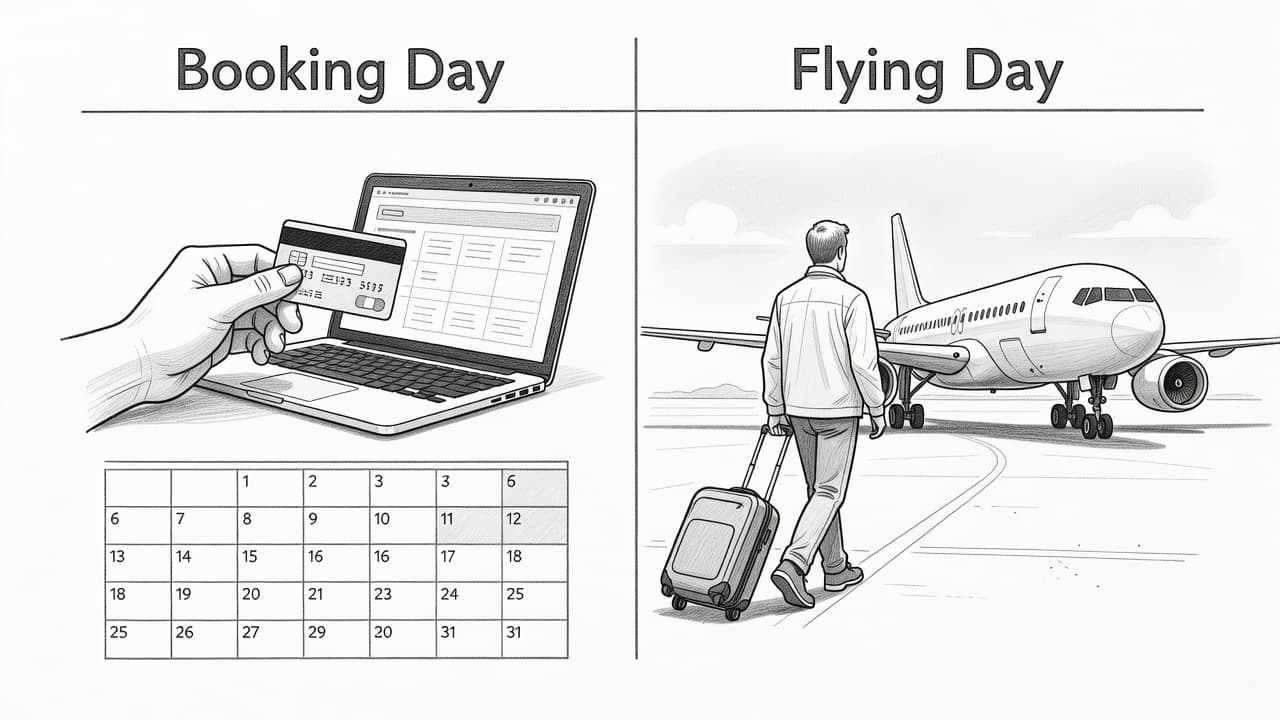
The easiest way to save on airfare is to stop treating booking day and flight day like the same thing. They play different roles, and the cheapest choice often comes from mixing them, not matching them.
A good example is this: you might book on Friday when prices are softer, then fly on Tuesday or Wednesday when departure fares are usually lower. That combo can beat a lot of one-day searches, and it keeps you from locking yourself into a weekend price just because you clicked at the wrong time.
 ### Best day to book versus best day to fly
Think of booking day as the day you buy the ticket, and flight day as the day you actually travel. That sounds obvious, but a lot of travelers blur the two together and miss easy savings.
For booking, Friday is the strongest option in the 2026 data we have. It often gives you a better chance at a lower fare because you are shopping before the weekend rush starts. For flying, the best prices usually show up on Tuesday and Wednesday, with Friday also looking strong in some 2026 reports for certain routes.
Here's the cleanest way to compare them:
| Day | Best for | Plain-language take |
|---|---|---|
| Friday | Booking, and sometimes flying | Best day to book cheap flights, and a solid travel day on some routes |
| Tuesday | Flying | Often one of the cheapest days to depart |
| Wednesday | Flying | Usually very close to Tuesday for low fares |
| Saturday | Booking for some domestic routes | Can be a decent booking day, but not the strongest overall |
| Sunday | Neither | Often a pricey day to book and a weaker day to fly |
| Monday | Neither | Often expensive for both booking and travel |
The important part is the pattern. Book on the cheaper shopping day, then fly on the cheaper travel day if your schedule gives you any room to move. That is where cheap flights usually start to show up.
If you want a broader read on why Friday is now getting so much attention, Expedia's 2026 Air Hacks report lays out the shift clearly. The short version is simple, the best booking day and the best flight day are no longer the same old Tuesday story.
Which days usually cost the most
Sunday is often one of the most expensive days to book, and it is also one of the weakest days to fly. That combination makes it a tough day if you are trying to keep airfare down.
Monday is not much better. It often sits near the top of the price ladder for both booking and flying, especially on domestic routes where business travel and return trips push demand higher. If you have the choice, it usually pays to skip both days.
A quick rule of thumb helps here:
- Best booking days: Friday first, then look at Saturday or other low-demand windows.
- Best flying days: Tuesday and Wednesday, with Thursday sometimes close behind.
- Least favorable days: Sunday and Monday, since prices tend to run hotter.
That does not mean you should never book on a Sunday or fly on a Monday. Life gets messy, and sometimes the schedule wins. But if you are comparing several dates, start with the cheaper booking day and the cheaper flight day first. That simple move can save you from paying weekend prices on both ends of the trip.
Hidden fees and other costs that can erase your savings
A low fare can look great until you add the extras. Bags, seats, change rules, and airport logistics can turn a cheap flight into an average one fast, and sometimes into an expensive one.
That is the part bargain hunters need to watch. The headline price is only the opening line, not the full story.
 ### Bag fees, seat fees, and basic economy traps
The most common surprise is baggage. A fare that looks $40 cheaper can vanish the moment you add a carry-on, a checked bag, or both. On some airlines, even the cheapest seat comes with no real seat choice, so you pay again if you want to sit with your travel partner or avoid the back row.
Basic economy is where a lot of people get caught. It often sounds like regular economy, but the rules are tighter. You may lose advance seat selection, earn fewer perks, and face stricter change rules. On some airlines, the fare even limits what kind of bag you can bring without an added charge.
Here is the simple test: if you know you will bring a bag, pick a seat, or change the trip, add those costs before you compare flights. A bare-bones fare can stop being cheap once the extras show up.
For a closer look at how bag rules vary, Skyscanner's baggage fee guide is useful when you want to compare the fine print before you book.
The cheapest ticket is only cheap if you can actually travel on it the way you planned.
Why the lowest fare is not always the best deal
The lowest price on the search results page can hide the real cost of the trip. A flight with a long layover might be cheaper, but you could spend half a day in an airport. Another fare might leave from a farther airport, which means more gas, parking, or rideshare money.
That is why the full trip cost matters more than the fare alone. Look at these items together before you book:
- Baggage rules: Check whether a carry-on or checked bag is included.
- Seat selection: See if you will pay extra to avoid random seating.
- Change and cancellation rules: Basic economy often has the tightest restrictions.
- Airport location: A cheaper fare at a far-off airport can cost more after transfers and parking.
- Layover time: A lower price is not a win if it adds a long, tiring connection.
The U.S. Department of Transportation now requires airlines to show certain fees earlier in the booking process, which helps, but it still pays to read the details before you click buy. You can review that rule in the DOT's fee disclosure announcement.
If two flights are close in price, compare the total trip cost instead of chasing the lowest headline number. A fare that is $25 cheaper can disappear the minute you add bags, seats, and ground transportation. That is how a "deal" turns into a bad buy.
Who should use this strategy, and who should skip it
This booking approach works well for some travelers and badly for others. If your dates are open, you have room to watch fares, and you care more about saving money than locking in the exact first option you see, it can pay off. If your trip is fixed, the smarter move is usually to book when the price looks fair and stop chasing the perfect day.
This works best for flexible travelers
If you can move your trip by a day or two, this strategy gives you the best shot at cheap flights. That extra wiggle room matters for couples, solo travelers, remote workers, and anyone who can shift airports or dates without upsetting the whole plan.
 Budget travelers get the biggest upside here. When you are already trying to keep a trip affordable, checking a few nearby dates can uncover a much better fare than locking in the first search result. That same idea works for remote workers, too, since a Monday departure or Thursday return may be easy to swap.
This approach is also useful if you are open to alternate airports. A small drive can open up a lower fare, especially on routes with several nearby options. Couples and solo travelers usually have the most freedom here because they are not trying to coordinate a full family calendar.
A few people fit this strategy especially well:
- Flexible vacation planners who can travel a day earlier or later.
- Remote workers who can shift trips around meetings.
- Couples who only need to line up two schedules.
- Solo travelers who can book the best fare without asking anyone else.
- Airport hoppers who are willing to compare nearby departure cities.
If your plans can bend, your airfare often can too.
Who should not wait for the perfect booking day
Some trips do not leave room for timing games. If your dates are locked in, waiting for the "right" day can cost more than it saves. That is especially true for holidays, weddings, cruises, school breaks, and other trips where the calendar is non-negotiable.
If you are traveling for Thanksgiving, Christmas, spring break, or a family event, book when the fare looks fair and move on. The same goes for cruises, where missing the ship is not an option. A decent price today is usually better than a lower price you hoped would show up later.
This also applies to urgent trips. Last-minute travel for funerals, medical reasons, or sudden work needs is not the time to hunt for a magic booking window. At that point, schedule and availability matter more than squeezing out a few dollars.
The simple rule is this, wait only if your trip can truly wait. If the date is fixed, book the fare that feels reasonable and stop gambling on a better one that may never appear.
Tools that make it easier to spot cheap flights
The right tools can save you from checking fares all day. Instead of refreshing the same route over and over, you can let alerts and flexible search features do the heavy lifting, then jump in when prices dip.
 The best setup is simple: track a route, widen the date range, and compare nearby airports. That mix catches the kind of price swings that are easy to miss if you only search once or twice. Later in this article, it also makes sense to link readers to related guides like how to use Google Flights, how to set price alerts, best time to book flights, cheap flights from your airport, and how to find mistake fares.
How to use fare alerts and flexible date search
Fare alerts are the easiest way to stop babysitting flight prices. You set the route once, then get a notice when the fare drops, rises, or hits a level you care about. Google Flights, Skyscanner, and Trip.com all make this easier, and they are a strong first stop if you want to catch a sudden dip without checking every day.
Flexible date search is just as useful. Instead of locking into one departure date, you can scan a whole month or a nearby date range and spot the cheaper days at a glance. Google Flights is especially handy for this because its calendar view and date grid make low-fare days easy to compare, while Skyscanner's whole-month view is good for quick side-by-side checks. Google Flights price tracking is one of the simplest ways to start.
A good routine looks like this:
- Search your route and turn on a price alert.
- Open the calendar or whole-month view.
- Check nearby dates, not just your first choice.
- Recheck when the alert pings you, especially if your trip is still flexible.
If you only search fixed dates, you can miss the cheapest fare sitting one day away.
When deal newsletters and error fares are worth it
Deal newsletters are worth your attention if your plans are loose. Services like Going and similar flight alert newsletters can surface flash sales, mistake fares, and route drops before you would find them on your own. That matters most if you are open to surprise destinations or ready to book fast when a short-lived sale appears.
Error fares are a little different. They are rare, but when they show up, they disappear fast, and the best ones usually go to travelers who can move quickly. If you want absolute control over your destination and exact dates, these alerts may feel random. If you like bargains and can bend your plans, they can be gold.
For flexible travelers, the smartest move is to combine both:
- Set a fare alert for the route you want.
- Subscribe to deal newsletters for broader fare drops.
- Watch for surprise destinations if you are open to a trip first and a place second.
- Act fast on short sales, because the best ones rarely last long.
That way, you are not relying on one search method. You are building a small net, and cheap flights have a harder time slipping through it.
Common mistakes that make people overpay for flights
A lot of airfare mistakes come from being too sure about one rule. Flights are more stubborn than that. Prices move fast, and the cheapest day can change by route, season, demand, and how close you are to departure.
The safest move is to keep your search wide at first, then narrow it down once you see the pattern. That means checking more than one airport, more than one date, and more than one booking window before you commit.
 ### Searching only one airport or one date
If you only search one airport and one date, you give yourself the most expensive version of the trip. Nearby airports often have very different fares, even when they are only an hour apart. A small drive can be the difference between a decent fare and a much better one.
Date flexibility matters just as much. A fare on Tuesday or Wednesday can sit well below the same route on Friday or Sunday, and that gap can grow during busy travel seasons. Checking a few nearby dates is often the easiest way to spot real savings without making the trip harder.
That is where flexible search tools help. Google Flights, for example, lets you compare multiple airports and date ranges at once, which makes it easier to spot the cheaper option before you book. Skyscanner also points out that prices shift with demand, so fixed searches can miss better fares sitting just outside your chosen window.
A better approach looks like this:
- Compare your main airport with nearby options.
- Check a three to five day range around your first choice.
- Look at both departure and return dates before you buy.
- Recheck the route if your schedule has any room to move.
The goal is not to chase every possible fare. It is to avoid locking yourself into the most expensive version of the trip by accident. When you search wider first, cheap flights are much easier to find.
Relying on outdated travel advice
Old booking rules sound tidy, but they can also cost you money. The classic Tuesday myth is the best example. It used to feel reliable, but newer data shows that timing is more mixed now, and Friday often beats Tuesday for booking.
That matters because stale advice can make you wait for a deal that never shows up. If you keep hunting for one perfect day, you may miss a better fare that appears earlier in the week, or on a route that simply behaves differently. Airfare is not a fixed pattern, it is a moving target.
A rule that worked last year can be useless on your route today.
Instead of betting on one old tip, use current search results and fresh data. Compare fares across a few days, check the current prices on your route, and watch how they change as departure gets closer. Skyscanner's airfare timing guide is a good reminder that route demand and timing matter more than a single booking superstition.
The practical takeaway is simple. Use current prices, not old travel folklore. If one day looks cheap, book it. If the fare shifts by route or season, trust the live search results more than the rule you heard years ago.
Frequently asked questions about booking cheap flights
Booking cheap flights gets easier once you stop chasing old rules and start looking at the pattern in front of you. A few questions come up again and again, and the answers are simpler than most people expect.
 ### Is Tuesday still the best day to book flights?
No, not for most travelers in 2026. Tuesday used to get all the attention, but newer fare data points to Friday as the better day to book in many cases.
That doesn't mean Tuesday is bad. It just means the old "book on Tuesday" idea is outdated, and it can make you wait for a deal that never shows up. If you want the current breakdown, NerdWallet's flight timing guide shows how the weekly pattern has shifted.
Is Friday really cheaper now?
Yes, Friday is often the cheapest day to book cheap flights right now. Expedia's 2026 data shows Friday is a strong booking day for both domestic and international fares, while Sunday is often the most expensive.
That said, Friday is not a magic button. It gives you a better shot at a lower fare, but the route, season, and how close you are to departure still matter. If you see a good price on another day, don't overthink it.
How far in advance should I book?
For most domestic flights, a good starting point is about 1 to 2 months ahead. Expedia's 2026 data also points to a sweet spot around 31 to 45 days before departure.
For international flights, you usually need more time. A safer range is 2 to 8 months ahead, especially for popular routes or peak travel periods. The Points Guy's booking guide is a useful comparison if you want another view of the timing window.
Is weekend travel always more expensive?
Usually, yes, but not always by a huge amount. Friday and Sunday departures are often pricier because more people want them, while Tuesday and Wednesday are usually cheaper.
Still, weekend flights can be worth it if your trip is short or your schedule is fixed. Paying a little more for a Saturday flight may be smarter than losing a workday or adding hotel costs. The cheapest airfare is only the best deal if it actually fits your plan.
Is there a best time of day to buy flights?
No clear one. Airlines change prices based on demand, not the clock on your wall, so there is no reliable magic hour for buying. Some people swear by early-morning searches, but the evidence is mixed.
A better move is to watch the fare over a few days and set alerts. Skyscanner's pricing guide explains why prices can change many times in a single day. That is why the day you buy usually matters more than the time of day you click.
What is the simplest rule to follow?
If you want one rule you can actually use, keep it this simple:
- Book on Friday when possible.
- Fly on Tuesday or Wednesday if your schedule allows it.
- Book 1 to 2 months ahead for domestic trips.
- Book earlier for international flights, especially on busy routes.
- Compare nearby dates, because one day can make the difference.
That approach won't catch every bargain, but it gives you a solid shot at cheap flights without turning the process into a full-time job.
Conclusion
The old Tuesday rule doesn't hold up anymore. If you're trying to find cheap flights in 2026, Friday is the better day to book in the current data, while Tuesday and Wednesday are still the better days to fly.
That simple split matters. Check fares on Friday when you can, keep your travel dates flexible, and compare the full trip cost before you click buy.
A low fare only stays low if the bags, seats, and timing still work for you.