
Last-minute trips can still be cheap if you know where to look, and last minute travel deals are often better than people expect. The trick is using flexibility the right way, whether that means shifting your dates, changing airports, or grabbing a package before it disappears.
This guide skips the hype and focuses on practical ways to save on flights, hotels, vacation packages, and short getaways. If you're open on timing and destination, you've got a real shot at finding a deal fast, and the next section shows you where to start.
What makes last minute travel deals actually worth booking?
Last-minute deals can feel like a lucky break, but the good ones have a simple pattern. They show up when a provider would rather take some money than let a seat or room sit empty.
 That's why they can be so useful for flexible travelers. If you can leave midweek, fly at an odd hour, or book a hotel close to check-in, you're more likely to catch a price drop that came from empty inventory, not hype.
Why airlines and hotels slash prices at the last minute
Airlines and hotels both hate vacant inventory, but they handle it differently. A hotel room that stays empty tonight can never be sold again, so a discount makes sense if it brings in a booking. The same goes for a flight with open seats, though airlines are often less generous because they use pricing rules that reward early booking and punish late demand.
That's why you sometimes see a midweek flight priced lower than the same route on Friday, or a hotel room still available the day before check-in with a quiet markdown. The provider is trying to recover revenue before the clock runs out. A smaller sale is better than no sale at all.
When a last minute deal is a good deal, and when it is not
A cheap fare is only worth it if it still fits the trip. If the flight leaves at 6 a.m., has a terrible connection, or lands hours from where you actually want to be, that discount can disappear fast. Hotel deals can have the same problem, especially when the property is far from the area you planned to visit.
Watch for the details that change the real price:
- Hidden fees that raise the total after checkout
- Nonrefundable terms that leave no room for changes
- Bad flight times that cost you sleep, time, or another travel day
- Poor hotel locations that add rideshare or transit costs
A lower price is not a bargain if it makes the trip harder or more expensive to use.
The best last-minute deal is the one that still matches your plans. It saves money, but it also saves you from paying twice, once for the booking and once for the inconvenience.
The fastest ways to search for last minute travel deals
Speed matters when you're hunting last minute travel deals. The best search pattern is simple, compare flexible dates first, then widen the net to nearby airports and mixed-airline tickets. That's where the real savings usually hide.
A good deal can disappear in hours, so don't spend the first 20 minutes debating a perfect plan. Start with tools that show price changes fast, then trim the options down by total cost, not just the headline fare.
Use flexible date tools before you lock in a plan
If your dates can move even a little, you can save a lot. Shift a trip by one or two days, and the fare can change in a big way, especially on domestic routes.
Google Flights is one of the fastest places to start. Its calendar view makes cheap days easy to spot, and the Google Flights search page is built for quick comparison. KAYAK works the same way in a different style, using a price calendar and flexible date search so you can see where the lower fares land before you book. Skyscanner is also useful here, especially with month and everywhere-style searches when you're open on destination.
 > If the trip is flexible, the cheapest day is often not the day you first searched.
A fast way to scan options is to check:
- Google Flights calendar view for the lowest fares across nearby dates
- KAYAK price calendar for quick side-by-side date shifts
- Skyscanner month search when you want the cheapest window, not one exact day
Set alerts and let the tools do some of the work
Not every trip needs instant booking. If your travel is not urgent, price alerts can do the watching for you while you wait for a drop.
KAYAK price alerts are handy when you want to track a route without refreshing it all day. Hopper goes one step further with its booking prediction feature, which tells you whether to book now or wait. That makes Hopper useful when you want a simple yes-or-no answer instead of more tabs and more guessing.
For quick searches, this is the cleanest approach:
- Set a KAYAK alert on the route you want.
- Check Hopper's recommendation.
- Book when the numbers line up, not when the pressure does.
Check nearby airports and mixed-airline options
A nearby airport can cut the fare fast. Flying into Oakland instead of San Francisco is a classic example, and it's the kind of switch that can turn a so-so fare into a real deal. The same trick works in other metro areas where multiple airports sit close together.
 Mixed-airline searches can save money too. Sometimes a one-way ticket on one carrier and the return on another beats a standard round trip by a wide margin. That's worth checking on Google Flights, Skyscanner, KAYAK, Expedia, Priceline, and even package-focused options like Apple Vacations if you're comparing a flight plus hotel bundle.
When you compare routes, keep your eye on the total:
- fare
- bag fees
- seat fees
- airport transfer costs
A cheap fare that adds friction is not always the best deal. A slightly longer search usually beats a rushed booking, especially when the clock is ticking.
Book smarter by choosing the right kind of trip
The cheapest booking is not always a stand-alone flight. Sometimes the better move is a bundle, a resort package, or even a cruise, depending on how fast you need to leave and how much planning you want to do. If you pick the right trip type, the savings can show up without much effort.
 ### Why flight and hotel bundles can beat separate bookings
Bundle pricing works because sites like Expedia, Priceline, KAYAK, and JetBlue Vacations can discount the full trip instead of each part one by one. That means the package price can drop even when the hotel is not your main priority, because the combined booking is what unlocks the lower rate. You can sometimes save more by pairing a decent hotel with a fair flight than by chasing the absolute cheapest airfare alone.
That matters most for beach trips and weekend getaways, where convenience counts. A package can keep the trip simple and still leave room in the budget for food, activities, or a nicer room. Travelocity lays out package deals clearly, and Southwest Vacations advertises bundle savings on flight-plus-hotel trips too.
When all-inclusive and resort offers give the best value
All-inclusive trips make the most sense when food, drinks, and extras would add up fast on their own. Think Cancun, Jamaica, Hawaii, or even Las Vegas-style resort offers, where the deal may include free upgrades, resort credits, waived resort fees, or kids staying free. The headline price may look higher at first, but the total trip cost can come out lower once the extras are added in.
 A package like this works best when you want one price and fewer surprises. Expedia's all-inclusive deals and resort offers on similar sites are built for travelers who care about value, not just the lowest number on the screen.
Last minute cruises and short escapes for flexible travelers
Cruises and short escapes are smart backup options when you can leave soon and want less to manage. Costco Travel often surfaces cruise and package deals that feel easier to compare, while Virgin Voyages style offers can appeal to travelers who want a built-in plan without a lot of moving parts. If you want a quick reset, a short city break or a beach trip can be easier to book than a custom multi-stop vacation.
 > If you want fewer decisions, cruise and resort packages can beat piecing together flights, hotels, and transfers one at a time.
For travelers who want an easy plan, that simplicity is the point. One booking, one price, fewer surprises, and a faster path out the door.
The best booking timing and travel days to save money
If you want to cut costs fast, timing matters almost as much as price. The sweet spot is usually a mix of midweek travel, off-peak departure times, and a booking window that fits the route, not a single magic day on the calendar.
The good news is that you don't need to memorize every airfare study. A few patterns show up often enough to be useful, and they can shave real money off a last-minute trip. Think of them as shortcuts, not guarantees.
Choose midweek flights whenever you can
Tuesday and Wednesday flights are often cheaper because demand is lower. Business travelers usually crowd the start and end of the week, while leisure travelers pile onto Friday and Sunday. That leaves the middle of the week with more open seats and less pressure on prices.
Those same dates can also mean fewer crowds at the airport. Security lines move faster, gates feel less packed, and the whole trip starts with less friction. For a last-minute trip, that matters almost as much as the fare.
 Friday and Sunday are usually the expensive days to fly. If your dates are flexible by even one day, moving a trip from Sunday to Wednesday can change the price more than you expect. For a quick sanity check, compare your route against NerdWallet's flight timing guide, then pick the cheapest midweek option that still fits your schedule.
If you only change one thing, change the travel day before you change the destination.
Look at departure times, not just the date
The clock matters too. Early morning flights are often cheaper because fewer people want them, and late evening departures can get the same kind of discount. Airlines know most travelers prefer the middle of the day, so they can charge more for that convenience.
These off-peak flights can also come with a lower delay risk in some cases. Morning departures tend to leave before the day gets messy, while late flights sometimes avoid the busiest connection banks. That doesn't make them delay-proof, but it does make them worth checking.
Keep it simple, compare the price against the time of day, then ask one question: is the savings worth the schedule shift? If the answer is yes, book the awkward flight and spend the difference somewhere better.
Watch for booking windows and price drop chances
Last-minute deals move fast. A good fare can appear in the morning and vanish by lunch. Still, not every price is final, and some routes drop again before departure if seats stay open.
That is why the 24-hour cancellation window matters. If you book a fare and spot a better one within that grace period, you may be able to cancel and rebook without losing money. It gives you a short runway to keep watching prices after you commit.
Some days are better for booking too. A few airfare studies point to Sunday or Tuesday as decent times to buy in certain situations, but the bigger pattern is this, watch the fare closely and act when the number is strong. A cheap ticket is like a seat at the front of a sale rack, if you wait too long, it's gone.
How to avoid the traps that make last minute travel more expensive
Last-minute bookings can look cheap at first glance, then get expensive fast once the extras show up. A low fare is only useful if the final total still makes sense, and that means checking the details before you hit book.
The biggest mistakes are usually simple. People book too late, skip the fine print, trust a weak third-party site, or grab a fare that creates expensive problems later. That is where the savings disappear.
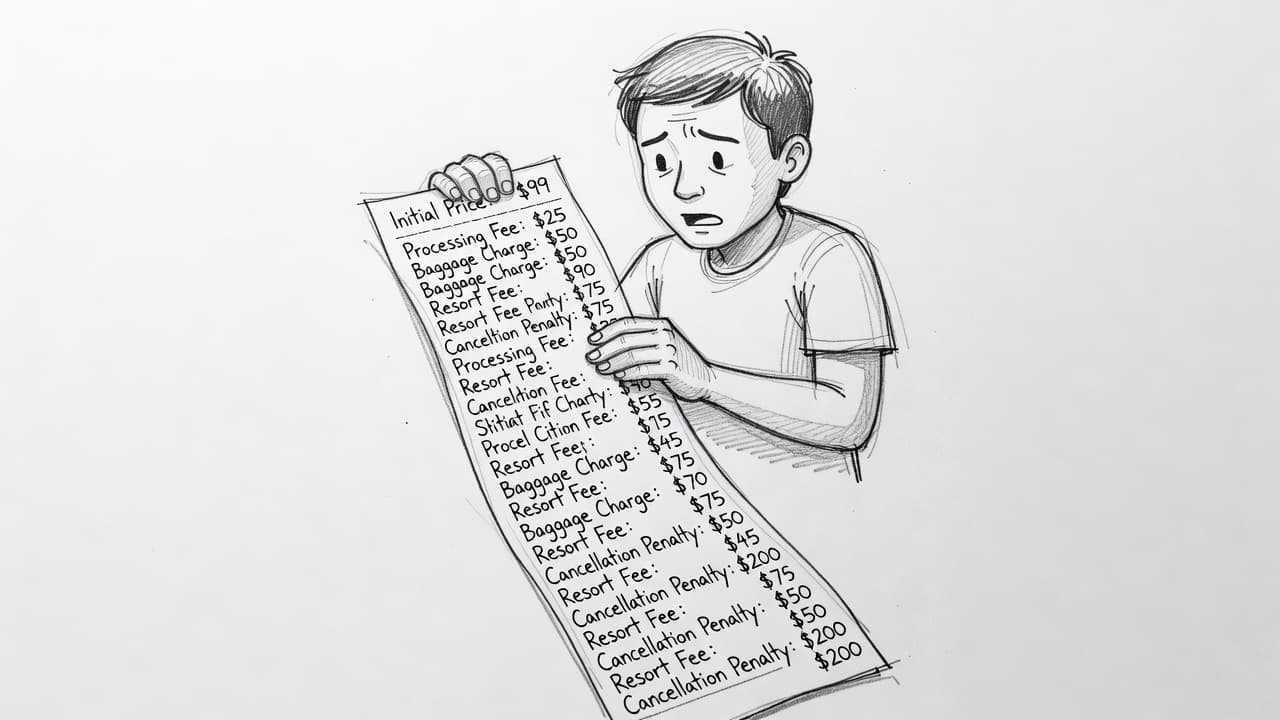 ### Watch for hidden fees and weak cancellation rules
A low headline price can be a trap if the extras pile up. Baggage fees, resort fees, seat selection charges, and cleaning fees can turn a bargain into a bigger bill than expected. Add a nonrefundable rate on top, and you may be stuck paying for a trip that no longer fits your plans.
That is why the full total matters more than the advertised fare. A flight that looks cheaper by $60 can lose that edge after a checked bag and seat fee, and a hotel with a low nightly rate can jump once resort fees are added.
Before you book, check for:
- Baggage fees that apply at checkout, not on the first screen
- Resort fees that are charged per night
- Seat selection charges on basic economy or budget fares
- Nonrefundable terms that leave little room to change plans
If the booking rules are strict, the "deal" can cost more than a flexible option.
Use direct booking when flexibility matters
When plans might shift, booking directly with the airline or a major hotel brand usually makes life easier. You get clearer rules, better support, and fewer headaches if something goes wrong. If your flight changes, a direct booking is often simpler to rebook than a reservation buried inside a third-party system.
This matters most for last-minute trips, because last-minute plans are more likely to change. A direct booking can save you time when you need a refund, a schedule change, or a room adjustment without a long back-and-forth.
If flexibility is part of the trip, direct booking often pays off in the end. A slightly higher fare can be the cheaper move when it comes with better support and easier rebooking.
Skip risky sites and use incognito mode the smart way
Obscure third-party sites can hide problems behind a low price. Poor support, confusing rules, and surprise add-ons are common enough to make caution worth it. Some sites also make it hard to tell whether the deal is actually better than booking direct.
A simple way to keep your searches cleaner is to clear cookies or use incognito mode before checking prices again. It won't work magic, and it won't force prices down on its own, but it can help keep your search history from muddying the results.
For a quick reality check, compare the same itinerary in more than one place and look at the full cost. Smart comparison beats travel tricks every time, especially when the clock is ticking.
Conclusion
The best last minute travel deals usually go to travelers who stay flexible and compare the full picture, not just the first cheap fare they see. A better date, a nearby airport, or a package deal can turn a rushed search into real savings.
Start with price alerts, then check flights, bundles, and vacation packages before you book. That simple order gives you a faster way to spot the deal that actually fits your trip.
The fastest path to a cheaper getaway is still the same one you opened with, move quickly, compare smart, and book the trip that makes sense today.